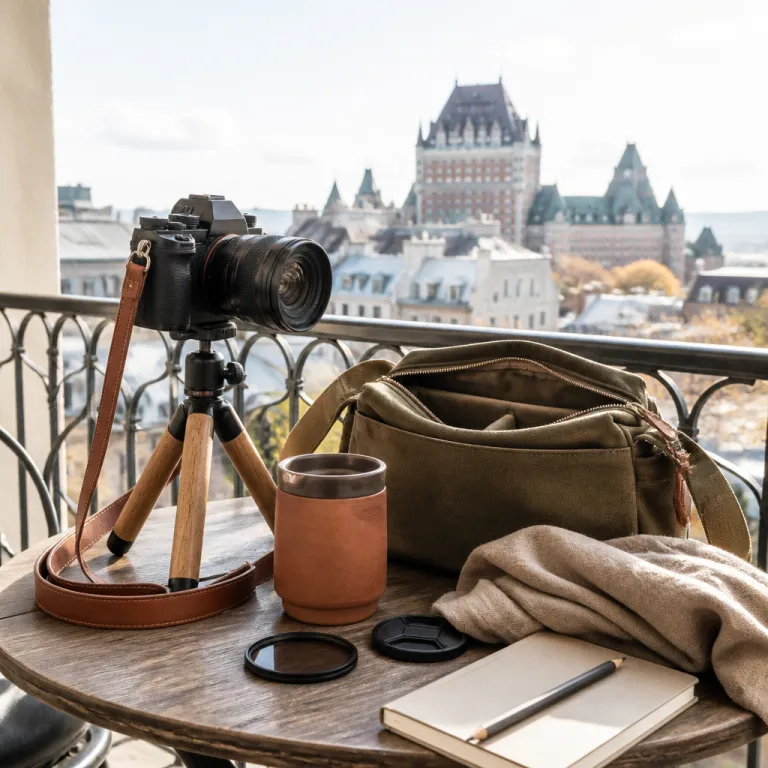
Why Quebec City photography spots matter when choosing your hotel
Quebec City rewards travellers who think about photos before they book a hotel. In a compact historic city, your choice of address near the best Quebec City photography spots can mean sunrise views from your window instead of a rushed taxi ride. For anyone balancing luggage, limited time, and a camera, proximity to the most beautiful streets and terraces quietly shapes the entire stay.
The old town is divided into upper town and lower town, and each area offers very different city photo opportunities. Staying in upper town near the iconic Fairmont Le Château Frontenac or the Parliament Building places you steps from Dufferin Terrace, where you can capture sweeping photos of the St. Lawrence River and the lower town below. Choose a hotel in lower town near Quartier Petit Champlain and Place Royale instead, and you wake up inside cobbled lanes that feel like a film set at blue hour.
Photographers and tourists alike often ask, “What are the best photography spots in Quebec City?” and the honest answer is that your hotel location decides how many of them you will actually reach. The city welcomed about 4.5 million visitors in 2019, according to Destination Québec cité’s tourism statistics, so staying close to key places in Quebec City helps you photograph landmarks early, before the crowds fill every rue and terrace. When you compare hotels, think not only about the room but also about how the surrounding streets will look in your photos and how quickly you can walk to your favourite viewpoints.
Staying near Château Frontenac and Dufferin Terrace for iconic skyline photos
For many visitors, the most recognisable Quebec City photography spots cluster around Château Frontenac and the long wooden boardwalk of Dufferin Terrace. Booking a hotel in this part of upper town gives you repeated chances to capture the castle-like Fairmont Le Château Frontenac silhouette in changing light. Early morning brings soft pastel tones, while late afternoon creates warm highlights that flatter every building and street.
Several hotels line rue Saint-Louis and nearby streets, placing you within a two to five minute walk of the terrace and the Château Frontenac façade. For example, Fairmont Le Château Frontenac (1 Rue des Carrières; approx. 46.8110° N, 71.2053° W) sits directly above Dufferin Terrace, Hôtel Manoir Morgan (12 Rue Sainte-Anne) is roughly 200 m from the boardwalk, and Hôtel Clarendon (57 Rue Sainte-Anne) is about a five minute walk from the railings overlooking the river. From here you can frame beautiful photos of the lower town, the river, and the distant Île d’Orléans without ever needing a taxi or bus. At night, the illuminated Parliament Building and the nearby city hall add elegant city photo compositions, especially when light reflects on wet cobblestones after rain.
When you stay close to Dufferin Terrace, you can also explore quieter angles along rue des Carrières and the paths that drop toward the lower town. These side routes offer some of the best city Instagram perspectives, where the Château Frontenac towers above smaller stone houses and the river curves behind. Having your hotel only a few hundred metres away means you can return several times, experimenting with different lenses, times of day, and weather moods; a 24–70 mm zoom and a lightweight tripod are especially useful here, and for blue hour cityscapes try starting around ISO 400–800, f/8, and shutter speeds between 5 and 15 seconds.
Lower town charm around Petit-Champlain and Place Royale
If you prefer intimate streets over grand terraces, consider a hotel in the lower town near Quartier Petit Champlain. Here, every rue feels like a film backdrop, with hanging signs, stone façades, and staircases that create layered photos in any season. Staying nearby lets you slip out at dawn, when delivery trucks have not yet arrived and the only sounds are footsteps on the street and distant river traffic.
Rue du Petit-Champlain, often written as rue Petit Champlain, is one of the most photographed streets in North America, and it fully deserves its reputation. Hotels close to this address cluster around the base of the funicular, near the Breakneck Stairs, giving you instant access to colourful shopfronts, festive lights in winter, and flower boxes in summer. Auberge Saint-Antoine (8 Rue Saint-Antoine; approx. 46.8130° N, 71.2010° W) is about a six minute walk from Rue du Petit-Champlain, while Hôtel Le Priori (15 Rue Sault-au-Matelot) and Hôtel Port-Royal (144 Rue Saint-Pierre) sit within a similar radius of Place Royale. A few steps away, Place Royale offers a different mood, with its church, stone building walls, and cobbled square that tell the story of early French town life.
Because this part of Quebec City is compact, you can collect many photos in a short time without exhausting walks. You might start with a wide city photo from the base of the Breakneck Stairs, then move to tighter photos of doorways and signs along each rue. When crowds grow, you can retreat to your hotel room, review your photos, and head back out for blue hour when the lamps glow and the streets regain their beautiful calm; a fast prime lens around 35 mm works well for this low-light atmosphere, and settings like ISO 1600, f/1.8–f/2.8, and 1/60–1/125 s help keep handheld images sharp.
Choosing a hotel on historic rues for character filled street photography
Some travellers want their hotel to feel like an extension of the city’s historic fabric. In Quebec City, that often means choosing an address on a storied rue such as rue Saint-Louis, rue Saint-Jean, or one of the narrower lanes branching toward the fortifications. These streets combine daily life with heritage architecture, giving you spontaneous photo opportunities every time you step outside.
Rue Saint-Louis is particularly appealing for guests who want both convenience and atmosphere, since it leads directly from the city gates toward Château Frontenac and Dufferin Terrace. Hotels along this street place you between the Parliament Building and the castle, so you can walk in either direction and find classic Quebec City photography spots within minutes. Side streets like rue des Jardins or rue des Remparts reveal quieter building façades, ivy covered walls, and views toward the river that work beautifully for more contemplative photos.
When evaluating hotels on these rues, pay attention to which side of the street your room may face. A room overlooking a lively street can deliver engaging city Instagram content, with café terraces, passing carriages, and changing light throughout the day. A courtyard facing room, by contrast, offers calmer mornings but still keeps you close to the best places in Quebec for wandering with your camera at any time; always ask reception to confirm whether your window faces a rue, a courtyard, or the fortifications.
Day trips from your hotel to Montmorency Falls and beyond
Not all Quebec City photography spots sit inside the fortified walls, and some of the most dramatic photos come from short excursions. Montmorency Falls, located about 12 km and a brief drive from the old town, offers powerful scenes of water plunging over a cliff roughly 83 metres high, which stands taller than Niagara Falls. Many hotels can arrange transport or guided photography tours, making it easy to fit this outing into a tight schedule.
From a photographer’s perspective, Montmorency Falls rewards different approaches depending on the time of day and season. Early morning often brings mist and softer light, while late afternoon can produce rainbows in the spray that translate into beautiful photos for any city Instagram feed. Walkways, a suspension bridge, and viewpoints on both sides of the falls allow you to vary your city photo compositions, from wide landscapes to tighter details of rock and water.
Back in Quebec City, you can complement these nature shots with urban scenes around the port area and the lower town. Hotels near the waterfront give you easy access to both the river and the historic streets of Petit Champlain, so you can move from waterfalls to stone building façades in a single day. This mix of natural and urban places in Quebec helps your photo collection feel richer and more representative of the region, especially if you alternate wide river views with close-ups of architectural details.
Practical tips for photographers booking a hotel in Quebec City
When you compare hotels in Quebec City, think like a photographer as well as a guest. Check maps to see how far each address is from key Quebec City photography spots such as Château Frontenac, Dufferin Terrace, Place Royale, and Quartier Petit Champlain. A difference of 500 metres can decide whether you comfortably reach sunrise on foot or miss the best light entirely.
Ask the hotel directly about room views, rooftop access, and nearby terraces that might enhance your photos. Some properties overlook the river, others face a historic rue, and a few sit near city hall or the Parliament Building, each offering distinct city photo possibilities. If you plan to use a tripod or drone, confirm any house rules in advance and remember that local regulations apply, especially near government buildings and dense town streets; drones are generally restricted in central Old Quebec under Canadian aviation rules, so always check current Transport Canada guidance before flying.
Photography in Quebec City is a year round activity, so pack for changing weather and cobbled streets. Wear comfortable shoes, check weather forecasts, and respect local customs, especially when photographing in residential areas or near religious building entrances. Many visitors join walking tours, guided photography tours, or self guided exploration, and “What are the best photography spots in Quebec City?” is often answered with the same trio: “Château Frontenac, Old Quebec, Montmorency Falls.” For soft light and manageable crowds, late spring and early autumn are particularly rewarding months.
Key figures that highlight Quebec City’s visual appeal
- Quebec City welcomed about 4.5 million visitors in 2019, according to Destination Québec cité, which means popular Quebec City photography spots can become crowded by late morning.
- The historic core of Old Quebec is recognised as a UNESCO World Heritage Site and includes dozens of protected buildings and monuments, giving photographers an unusually dense concentration of heritage façades within a walkable area.
- Photography activity has grown alongside a rise in social media sharing, with many visitors seeking city Instagram ready views from Dufferin Terrace, Château Frontenac, and Quartier Petit Champlain.
- Local guides report that early morning and late afternoon remain the most requested tour times, since “When is the best time to photograph Quebec City?” is consistently answered as “Early morning or late afternoon for optimal lighting.”
FAQ about Quebec City photography spots and hotels
What are the best photography spots in Quebec City near hotels?
The most reliable Quebec City photography spots near hotels include Château Frontenac, Dufferin Terrace, Place Royale, Quartier Petit Champlain, and the streets around rue Saint-Louis and rue Saint-Jean. Many hotels sit within a five to ten minute walk of these areas, especially in upper town and lower town. When booking, look for properties inside the old city walls to maximise walking access.
When is the best time to photograph Quebec City while staying in the old town?
Early morning and late afternoon offer the most flattering light for city photo work in Quebec City. Staying in a central hotel lets you reach Dufferin Terrace, Petit Champlain, and Place Royale quickly at these times, before day trippers arrive. Evening blue hour is also excellent, especially around city hall, the Parliament Building, and the illuminated Château Frontenac.
Are there guided photography tours that start from hotels in Quebec City?
Several local companies run guided photography tours that either collect guests from central hotels or meet at easy to reach landmarks. These tours often cover upper town viewpoints, lower town streets, and sometimes Montmorency Falls in a single itinerary. According to local information, “Are there guided photography tours available?” is answered simply: “Yes, several companies offer guided tours.”
Which neighbourhood is best for photographers booking a hotel in Quebec City?
Photographers who want iconic skyline photos usually prefer upper town near Château Frontenac, Dufferin Terrace, and the Parliament Building. Those who love intimate street scenes often choose lower town near Quartier Petit Champlain and Place Royale, where every rue feels cinematic. Both areas are compact, so you can easily walk between them if you choose a hotel near the funicular or the main city gates.
How can I balance hotel comfort with access to Quebec City photography spots?
Start by deciding which subjects matter most: river views, historic streets, or government buildings. Then shortlist hotels within a short walk of those locations, checking maps for distance to Dufferin Terrace, Place Royale, and key rues like rue Saint-Louis. Finally, confirm practical details such as storage for camera gear, early breakfast times, and staff familiarity with local photography friendly routes.