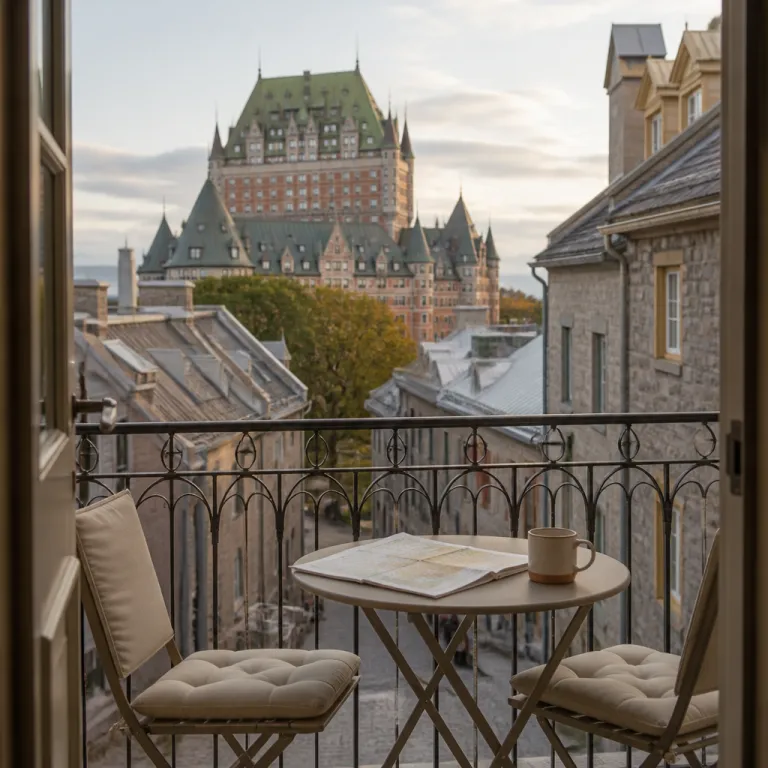
How Quebec City historical sites shape your hotel choice
Quebec City is one of the rare places in North America where you can sleep just steps from intact stone walls and centuries-old streets. The old city evolved from a French settlement founded by Samuel de Champlain in 1608 into a British stronghold, and that layered history still guides where travellers should stay. When you compare hotels, think first about how close you want to be to the most emblematic Quebec City historical sites inside and around the Fortifications of Quebec National Historic Site.
The Upper Town is located on the cliff above the St. Lawrence River, and this elevated district concentrates many national historic landmarks. Here you find the Citadelle de Quebec, the Parliament Building, the Fortifications of Quebec and the grand Fairmont Le Château Frontenac, all forming a compact area where almost every historic building tells a story about Canada and its colonial past. Choosing a hotel in this Upper Town zone means you can walk to several historic sites in minutes, which is ideal if you want to explore early, return easily for a rest and head out again in the evening.
Down below, the Lower Town of Quebec City offers cobbled streets, stone houses and river views. This part of the city lines the riverfront and preserves some of the oldest surviving houses and commercial buildings in Canada, many of them listed on the Canadian Register of Historic Places. If you stay here, you will be surrounded by historic places but face a short uphill walk or funicular ride to reach the fortifications and the provincial institutions on the plateau.
Staying near the fortifications of Quebec and the Quebec Citadel
For travellers focused on military history, a hotel near the Fortifications of Quebec offers the most immersive base. The city walls form a National Historic Site that encircles much of the Upper Town, and several gates and bastions are visible from nearby streets and hotel windows. Because this defensive ring is managed by Parks Canada as part of the Fortifications of Quebec National Historic Site, paths along the ramparts are well maintained, signed in both French and English and easy to reach on foot.
The Citadelle de Quebec itself is a star-shaped fortress located on Cap Diamant, and it remains an active military installation as well as a major visitor attraction. When you stay in the city close to the Citadel, you can time your day around guided tours, the changing of the guard (typically in summer) and evening walks along the walls overlooking Quebec City and the river. Many travellers appreciate that this area is quieter at night than the streets directly around Château Frontenac, while still keeping every major historic site within a 5 to 15 minute walk.
Artillery Park, another component of the same National Historic Site, lies just inside the walls and offers a different perspective on the city’s defences. This compact park sits near the Saint-Jean Gate and preserves barracks, workshops and a powder magazine that illustrate how French settlers and later British forces used the complex. If you choose accommodation between Artillery Park and the Parliament Building, you will be positioned between military heritage, political power and several green parks that soften the stone landscape.
Choosing a hotel around Château Frontenac and the riverfront
Many visitors want to stay within sight of Château Frontenac, the iconic copper-roofed hotel that dominates the skyline. This landmark building stands on the Dufferin Terrace above the river and occupies the cliff where Samuel de Champlain first established his trading post. From here, you can walk directly to several Quebec City historical sites, including the remains of earlier forts preserved beneath the terrace and interpreted as part of a National Historic Site.
The streets immediately behind Château Frontenac lead down toward Place Royale and the Petit-Champlain quarter, where some of the oldest stone houses in Canada still stand. One of the most frequently asked questions from travellers is “What is the oldest building in Quebec City?” and “Is Quebec City a UNESCO World Heritage site?” and these answers are rooted in this riverfront district. Staying nearby allows you to explore these historic places early in the morning, before day trippers arrive, and to enjoy the evening atmosphere when the city quiets again.
Hotels along the riverfront also give easy access to parks and promenades that frame the old port. These parks are not only pleasant green spaces but also part of the broader story of how the city used its waterfront for trade, defence and leisure throughout its history. When you choose a room facing the river, you connect your stay to the same waterway that made Quebec City a strategic site for both French and British empires.
Religious and civic landmarks ; staying near churches and Parliament
Some travellers prefer to anchor their stay around religious and civic Quebec City historical sites rather than military ones. In the Upper Town, the Notre-Dame de Quebec Basilica-Cathedral stands close to the city hall and several other important churches, forming a dense cluster of sacred buildings. Booking a hotel in this part of the city places you within a short walk of multiple church towers, quiet squares and narrow streets that reveal how faith shaped daily life in Quebec and in Canada more broadly.
Notre-Dame de Quebec is one of the most significant historic churches in North America, and its interior art and crypt attract visitors interested in both architecture and religious history. Around it, smaller chapels and religious houses, including early Jesuit residences, show how missionaries and religious orders supported colonisation, education and health care. When you stay nearby, you can easily attend services, explore these historic sites at different times of day and appreciate how the sound of bells still structures the rhythm of the old city.
Just a short walk away, the Parliament Building of Quebec rises at the edge of the old walls, symbolising the province’s political life. This imposing building is listed on the Canadian Register of Historic Places and forms part of the broader ensemble of national historic institutions in the capital. Choosing accommodation between the Parliament Building and the fortifications gives you quick access to guided tours, landscaped parks and monuments that explain how Quebec evolved from a fortified colony into a modern democracy within Canada.
Green spaces, parks and the rhythm of historic neighbourhoods
Historic cities can feel dense, so proximity to parks matters when you choose where to sleep. Within and around the walls, several parks managed by Parks Canada and the municipality offer lawns, trees and viewpoints that frame major Quebec City historical sites. Staying near these green spaces lets you balance museum visits and guided tours with quiet moments on benches, which is especially valuable after walking several kilometres on stone streets and staircases.
Artillery Park, already mentioned for its military heritage, doubles as a pleasant urban park with lawns and views toward the Saint-Jean Gate. On the other side of the Upper Town, the Governor’s Promenade and adjacent parks follow the top of the cliff, linking the Citadel, the Dufferin Terrace and other fortifications structures. Hotels located along these promenades often provide quick access to both green spaces and dramatic viewpoints, which can be decisive if you enjoy sunrise or sunset walks.
Beyond the walls, larger parks such as the Plains of Abraham form part of the same network of historic sites and green places. This vast park is recognised as a National Historic Site and is closely associated with the 1759 battle that shifted control of the city from French to British forces. If you choose a hotel near these outer parks, you will trade immediate access to the tight medieval-style streets for more open landscapes, jogging paths and picnic lawns that still keep you close to the historic core of Quebec City.
Practical tips for matching neighbourhoods to your travel style
Once you understand how Quebec City historical sites are distributed, you can match neighbourhoods to your priorities. Travellers who want to focus on museums, guided tours and formal historic sites often prefer the Upper Town inside the walls, where the Citadelle de Quebec, Parliament Building and several churches sit within a compact area. Those who value atmosphere, cafés and river views may lean toward the Lower Town, where stone houses, narrow lanes and the old port create a different rhythm.
When comparing hotels, look at walking distances in minutes or metres rather than just general descriptions. A property just inside the fortifications might be only 300 to 500 metres from the Citadel but involve a steep climb, while another just outside a gate could offer flatter access to the same historic places. Checking maps carefully helps you understand how the terrain, staircases and the layout of the walls will affect your daily routes between your hotel, parks, churches and other sites.
Season also shapes how you experience these historic sites and parks. In summer, extended daylight and open terraces make it easy to explore multiple Parks Canada locations and National Historic Sites in a single day, while winter brings quieter streets, snow-covered ramparts and the need for warmer clothing and good footwear. Whatever the season, choosing a hotel that aligns with your interest in military history, religious heritage, civic architecture or riverfront life will ensure that every step outside your door connects you meaningfully to the layered history of Quebec City.
Key figures about Quebec City historical heritage
- Quebec City was founded in 1608, making it one of the oldest continuously inhabited European settlements in North America, and this early date explains the high concentration of historic buildings and sites recognised by Parks Canada and UNESCO.
- The British conquest of Quebec City in 1759 transformed the fortifications and the Citadel into a strategic stronghold, and this shift is still visible in the mix of French and British military architecture around the parks, ramparts and lookout points.
- Early Jesuit residences from the 1630s are among the oldest surviving buildings in Quebec City, and their survival highlights the importance of religious houses in the city’s early development and educational history.
- The Historic District of Old Quebec is designated as a UNESCO World Heritage Site, reflecting the exceptional preservation of its fortifications, churches, civic buildings and public places within a living historic city.
FAQ about Quebec City historical sites and hotel locations
Which neighbourhood is best for exploring Quebec City historical sites on foot ?
The Upper Town inside the fortifications is best if you want to walk to the Citadelle de Quebec, Parliament Building, Notre-Dame de Quebec and several National Historic Sites in a compact area. From here, you can also reach Artillery Park and the Dufferin Terrace in a few minutes. The Lower Town is better if you prefer river views and older stone houses but are comfortable with uphill walks, staircases or the funicular between Upper and Lower Town.
Is it worth staying near the Quebec Citadel rather than by the river ?
Staying near the Citadelle de Quebec suits travellers interested in military history, quiet evenings and quick access to the ramparts and Parks Canada paths. The area around the Citadel and the fortifications is generally calmer at night than the streets near Château Frontenac. The riverfront offers livelier cafés, shops and cruise departures, so your choice depends on whether you prioritise tranquillity or a more animated atmosphere.
How close are hotels to major churches like Notre Dame de Quebec ?
Several hotels in the Upper Town are located within roughly 200 to 500 metres of Notre-Dame de Quebec, the city hall and other historic churches. This makes it easy to visit multiple religious sites in a single walk, including smaller chapels and early Jesuit houses. When booking, check whether the property sits inside the walls or just outside a gate, as this affects your walking routes and the number of staircases you will use.
Are the main parks and green spaces near historic buildings ?
Yes, many key parks are integrated directly with historic buildings and sites. The Plains of Abraham, Artillery Park and the promenades around the fortifications all combine lawns, viewpoints and preserved structures. Choosing a hotel near these parks lets you move easily between museums, open-air exhibits and relaxing green areas without long transit times.
Does staying in Old Quebec cost more than other parts of the city ?
Accommodation inside Old Quebec often commands higher prices because of its proximity to major historic sites, river views and UNESCO World Heritage status. However, staying just outside the walls in central Quebec City can offer better value while keeping you within a short walk or bus ride of the same attractions. Comparing total costs, including transport, parking and time, helps you decide whether a room inside or just beyond the fortifications suits your plans.
References
Government of Canada ; Parks Canada – Fortifications of Quebec National Historic Site (official site information and historical summaries)
UNESCO World Heritage Centre – Historic District of Old Quebec (designation details and statement of outstanding universal value)
Ville de Quebec – Heritage and historical buildings registry (local inventory of protected buildings and sites)