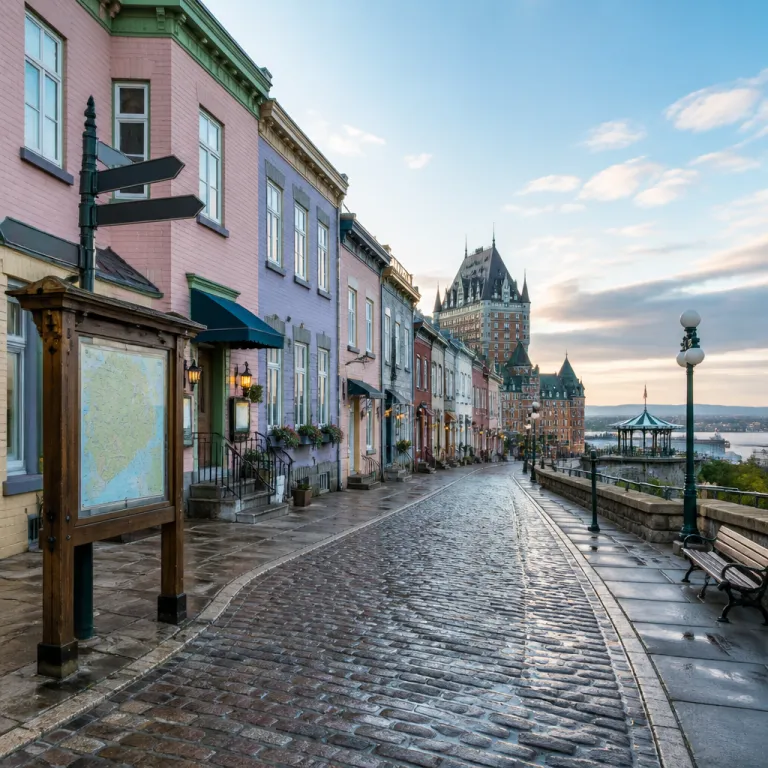
Why Quebec City walking tours matter when choosing your hotel
Quebec City rewards travellers who explore on foot, so your hotel choice should match the walking rhythm you prefer. When you plan Quebec City walking tours before booking, you can align your stay with the neighbourhoods, views, and streets you most want to experience. This approach turns a simple room reservation into a curated base for every walking tour you will take.
The historic core of this city in Canada is compact, and most guided walking experiences unfold within a few square kilometres. If you stay inside the fortified walls of Old Quebec, you step directly into living history every morning, with cobbled rue after rue unfolding beneath your feet. Travellers who prefer quieter evenings might instead choose a hotel just beyond the walls, where city walking remains easy but nightlife noise fades by the time you read in bed.
Think about how you enjoy a tour rather than only about star ratings. Guests who love early guided departures should prioritise hotels near common meeting points such as Place Royale, City Hall, or the foot of Fairmont Le Château Frontenac. Those who favour a late free tour or an evening guided walk might want a property closer to the Saint‑Lawrence River promenade or the upper entrance to the funicular that links the upper town and the lower town.
Staying near Château Frontenac, Dufferin Terrace and iconic views
Hotels around Fairmont Le Château Frontenac place you at the heart of many of the best Quebec City walking tours. From this elevated position above the Saint‑Lawrence River, you enjoy a sweeping view that frames the city, the waterway, and the distant Laurentian hills. It is an atmospheric area where every walking tour, free or paid, seems to pause so guests can absorb the panorama from Dufferin Terrace.
When you stay close to Château Frontenac, you are never far from a guide or a group assembling for a city walking departure. Many guided itineraries begin on or near Dufferin Terrace, then wind through the upper town before descending toward the lower town and Quartier Petit Champlain. This means you can leave your room, step outside, and join a guided Quebec City tour within minutes, often with less than a five‑minute walk to the meeting point.
For travellers comparing tour options, proximity matters more than it seems. A free walking experience that starts early feels easier when your hotel is a short stroll from the meeting point, especially in winter when snow covers every rue. If you plan several walking tours over multiple days, staying near Château Frontenac reduces transit time and lets you return quickly to rest, change shoes, or warm up between each guided outing.
Choosing between upper town charm and lower town character
Old Quebec divides naturally between the fortified upper town and the riverside lower town, and each area shapes Quebec City walking tours differently. In the upper town, you walk past government buildings, churches, and wide viewpoints, while the lower town offers intimate lanes, stone warehouses, and direct access to the Saint‑Lawrence River. Your hotel location between these two levels will influence how often you climb, descend, and pause during every walking tour.
Staying in the upper town suits travellers who want quick access to landmarks such as the Citadelle, Parliament, and the main gates. Many guided walking routes here focus on political history, military defences, and the transformation of the city from a French stronghold to a Canadian provincial capital. Guests who enjoy structured narratives often appreciate how each guided tour connects these sites into a coherent story of Quebec in North America.
By contrast, a hotel in the lower town places you close to Quartier Petit Champlain and Place Royale, where the city first grew along the river. Here, Quebec City walking tours emphasise merchant life, maritime trade, and the daily routines of local residents who once depended on the port. If you choose this area, you can join a free tour near the waterfront in the morning, then wander independently through the same streets in the evening, experiencing both guided and unguided perspectives.
How history, Samuel de Champlain and Place Royale shape your stay
Every serious walking tour in Quebec City returns to the figure of Samuel de Champlain, the French explorer who founded the settlement on the cliffs above the Saint‑Lawrence River. When you book a hotel near Place Royale, you sleep steps from the square where this early history is most tangible. It is an ideal base for travellers who want every city walking route to feel anchored in the origins of Canada.
Guides in this area often explain how Champlain chose the site for its defensive advantages and river access, then trace how the lower town evolved into a commercial hub. As you follow a guided walking itinerary through narrow rue du Petit‑Champlain and nearby lanes, you see how warehouses, chapels, and homes layered over the original footprint of the colony. Staying nearby allows you to join both morning and evening walking tours that interpret the same stones under different light and mood.
Some visitors prefer a free walking experience that introduces the broad sweep of history before they commit to a more specialised guided tour. In that case, a hotel between Place Royale and the funicular offers flexibility, because you can reach both lower town and upper town meeting points quickly, usually within 10 to 15 minutes on foot. This location also shortens the return journey after a long Quebec circuit, letting you rest before heading out again to read plaques, explore museums, or enjoy dinner in a local restaurant.
Free walking options, guided specialists and local tour operators
Quebec City supports a wide spectrum of walking tours, from free walking formats based on tips to highly specialised guided experiences. A Free Walking Tour of Quebec, for example, operates with certified local guides who lead guests through key streets and squares without a fixed upfront fee. This style of free tour appeals to travellers who want flexibility in budget while still benefiting from expert commentary on history and architecture.
For visitors seeking more depth, several small‑group operators offer themed walking experiences that focus on particular districts or stories. Companies such as Cicerone Tours, Tours Voir Quebec, and Ghost Tours of Quebec illustrate how guides emphasise local perspectives, weaving observations about daily life in Quebec City alongside broader narratives about Canada and North America. Literary‑themed walks inspired by Louise Penny’s novel “Bury Your Dead” add another layer, using a fiction lens to explore streets and sites that appear in the book.
When choosing a hotel, consider how easily you can reach these operators’ usual meeting points on foot. A central property in Old Quebec allows you to join a morning free walking introduction, an afternoon guided tour focused on military history, and an evening literary walk without relying on taxis. This density of options means that guests can sample multiple tour styles during a single stay, comparing how each guide’s approach illuminates different facets of the same streets.
Practical tips for hotel guests joining Quebec City walking tours
Quebec’s climate shapes every walking tour, so your hotel choice should reflect how you handle weather. In winter, select a property with easy indoor access to cafés and shops, so you can warm up quickly before or after city walking excursions. During warmer months, a hotel with a shaded terrace or river view can be a welcome retreat after long walking tours under the sun.
Whatever the season, pack comfortable shoes and confirm that your hotel offers early breakfast or takeaway options if you plan morning departures. Many guided walking experiences start between 9:00 and 10:00, and having food before you meet your guide will keep your energy steady. It is also wise to check whether your property provides umbrellas or small backpacks, which can make both free and paid tours more comfortable.
Finally, remember that Old Quebec’s streets are steep, and some routes between the upper town and the lower town involve significant climbs. Guests who prefer gentler gradients might choose a hotel closer to the funicular or public elevators, reducing strain between each walking tour. If you travel with children or older relatives, this small decision can transform Quebec City walking tours from a challenge into a pleasure for the entire group.
Key statistics for Quebec City walking tours and tourism
- Quebec City welcomes about 4.5 million visitors each year, according to recent estimates from the Quebec City Tourism Board and Destination Canada, which sustains a wide range of walking tours throughout the seasons.
- Walking tours operate year‑round, with morning, afternoon, and evening departures, so hotel guests can usually find a time slot that fits their travel rhythm.
- Local operators report rising demand for themed and private guided tours, a trend reflected in Quebec City Tourism Board product updates and Destination Canada market reports, which encourages more specialised itineraries that start near major hotels in Old Quebec.
- Family‑friendly formats are now common, and most guided walking experiences can accommodate children, making central hotel locations especially convenient for parents.
FAQ about Quebec City walking tours for hotel guests
Are walking tours available in winter for guests staying in Old Quebec?
Yes, some operators offer winter tours, and many hotels in Old Quebec can confirm schedules or help you book, though you should dress warmly and wear shoes with good traction.
Do tours accommodate large groups staying at the same hotel?
Many offer private tours for large groups, and it is common for guides to meet guests directly in the hotel lobby or at a nearby square if arranged in advance.
Are walking tours suitable for children who may tire easily?
Yes, most tours are family‑friendly, and choosing a hotel close to the starting point reduces extra walking so younger travellers can focus their energy on the guided route itself.
Should I book my walking tour before reserving my hotel room?
It is wise to research likely tours first, then choose a hotel within easy walking distance of your preferred meeting points, especially during busy travel periods.
Is a river view hotel better for walking tours than a location inside the walls?
A river view property near the lower town offers quick access to waterfront routes, while a hotel inside the walls of Old Quebec provides faster access to upper town itineraries, so the better choice depends on which style of tour you value most.
Trustful expert sources
- Quebec City Tourism Board
- Government of Canada – Destination Canada
- Organisation mondiale du tourisme (UN Tourism)